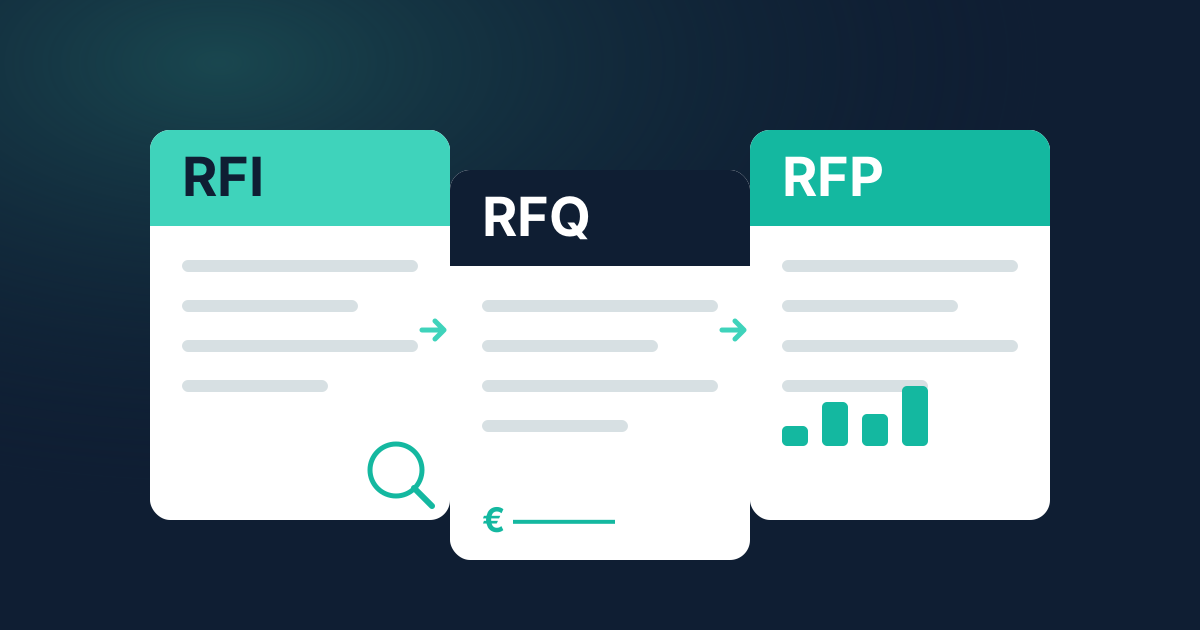
The three acronyms describe three different questions. Choosing the wrong one wastes your time and the suppliers'.
RFI: what is out there?
Use a request for information early, when you are exploring a market or a new category. It asks suppliers about capabilities, references and approach. It does not ask for a binding price.
RFQ: what will it cost?
Use a request for quotation when you know exactly what you want. Quantities, specifications and delivery terms are fixed, so price (and lead time) is the variable. Quotes are easy to compare line by line.
RFP: how would you solve this?
Use a request for proposal when you have a problem rather than a specification. Suppliers describe their solution and price. You then score proposals against weighted criteria such as fit, experience, risk and cost.
A quick rule
- You do not know the market: RFI.
- You know the product, you need a price: RFQ.
- You know the problem, you need a solution: RFP.
- You want the lowest price from qualified suppliers, live: reverse auction.
Keep the evidence
Whichever you use, record how you scored and why you chose the winner. That record is what protects you in a dispute or an audit.